Who is Vaibhav Suryavanshi? 14‑Year‑Old IPL Centurion From Bihar Who Became India’s Most‑Searched Cricketer in 2025

For most cricketers, the Indian Premier League is a destination reached only after years of domestic toil. For Vaibhav Suryavanshi, it arrived before adulthood, before board exams, before his voice had entirely settled. A boy from Tajpur in Bihar stepping into an IPL dressing room at 14 might once have sounded like fiction; a few weeks later he had not only played, but also scored a hundred at a tempo that rewrote the record book. In 2025, nothing else in Indian cricket captured public imagination quite as quickly.
When Google published its year‑end trends, the astonishment of older names quietly displaced by a teenager from a non‑traditional cricket state told its own story. It was not the veterans with World Cup medals or the superstars with commercial empires at the top of India’s “most‑searched” list, but a schoolboy with a southpaw flourish, a homemade technique and an innings of 35 balls that seemed to compress time itself.
Beginnings in Bihar
Bihar has seldom been considered a nursery for Indian internationals, its cricket administration long troubled and its pathways irregular. Vaibhav’s emergence from this landscape is therefore as striking as his age. Local accounts describe a child who could bat for hours in the heat, hitting with unusual power for his size, his family investing in bus journeys and borrowed kits to get him to matches against stronger schools and academies.
The first hint that this was no ordinary prodigy came when he appeared in age‑group tournaments still small enough to be mistaken for a younger sibling. Bowlers older and stronger discovered that anything marginally off length disappeared to or over the boundary. Selectors took note; invitations to zonal and national junior camps followed. By the time he was into his teens, he had already made a mark in India’s junior structure and earned a reputation as a player who relished pressure rather than shrank from it.
The leap to the IPL
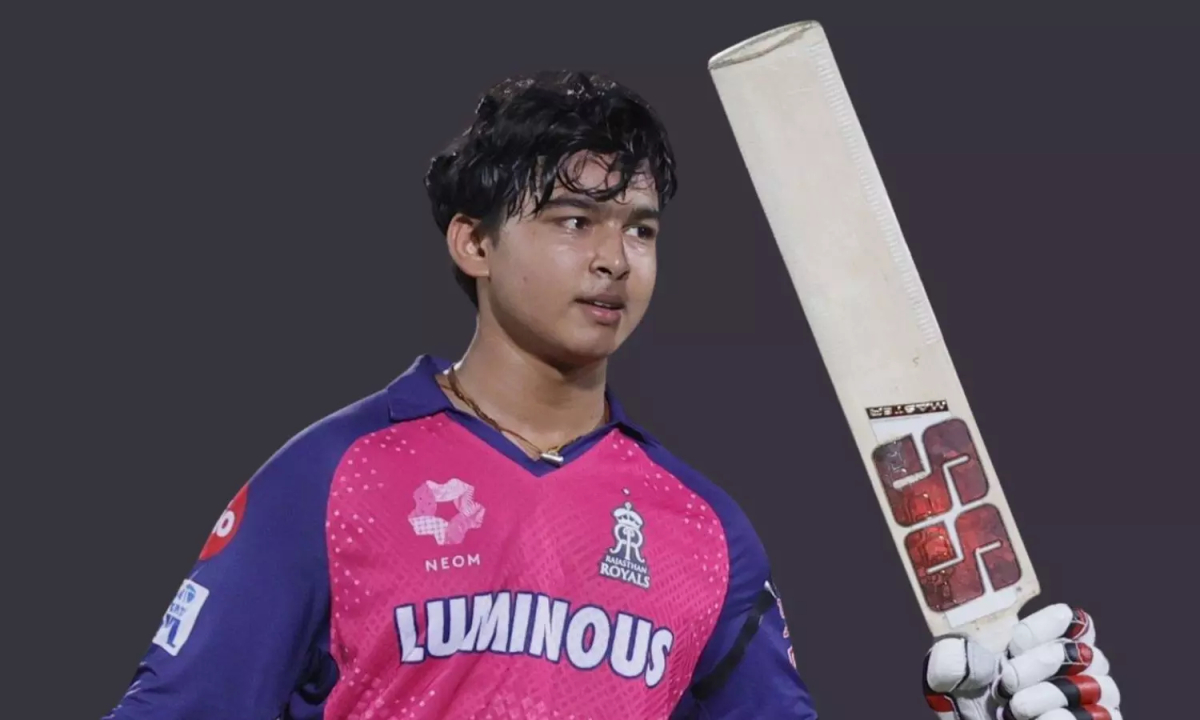
The leap from junior cricket to the IPL is usually too long for a single bound. Vaibhav’s was assisted by two converging forces: franchises searching obsessively for the next great Indian batter, and data‑driven scouting that now takes age‑group numbers as seriously as senior ones. Rajasthan Royals, whose eye for precocious talent has been proven before, were persuaded that the numbers and the temperament justified a bold investment.
Even then, expectation was modest. A 14‑year‑old in an IPL squad might be eased through the season as a long‑term project: net bowler to the stars, understudy in the field, student rather than protagonist. Fate and form had other ideas. An injury here, a loss of form there, a willingness from the coaching staff to risk the unconventional, and suddenly Vaibhav was pencilled into the XI. The night he finally walked out at an IPL ground, there was curiosity, a little concern, but not yet the sense that this could become an epochal evening.
The 35‑ball hundred
The innings that followed against Gujarat was as startling for its composure as for its violence. Chasing a substantial target on a good pitch, Rajasthan began briskly, but the task remained formidable when the teenager truly took charge. He did not appear overawed by attack or occasion. Instead, he constructed something that looked suspiciously like a plan: early drives to test the surface, then a sequence of picks over mid‑wicket and extra‑cover that suggested a premeditated assault on particular lengths.
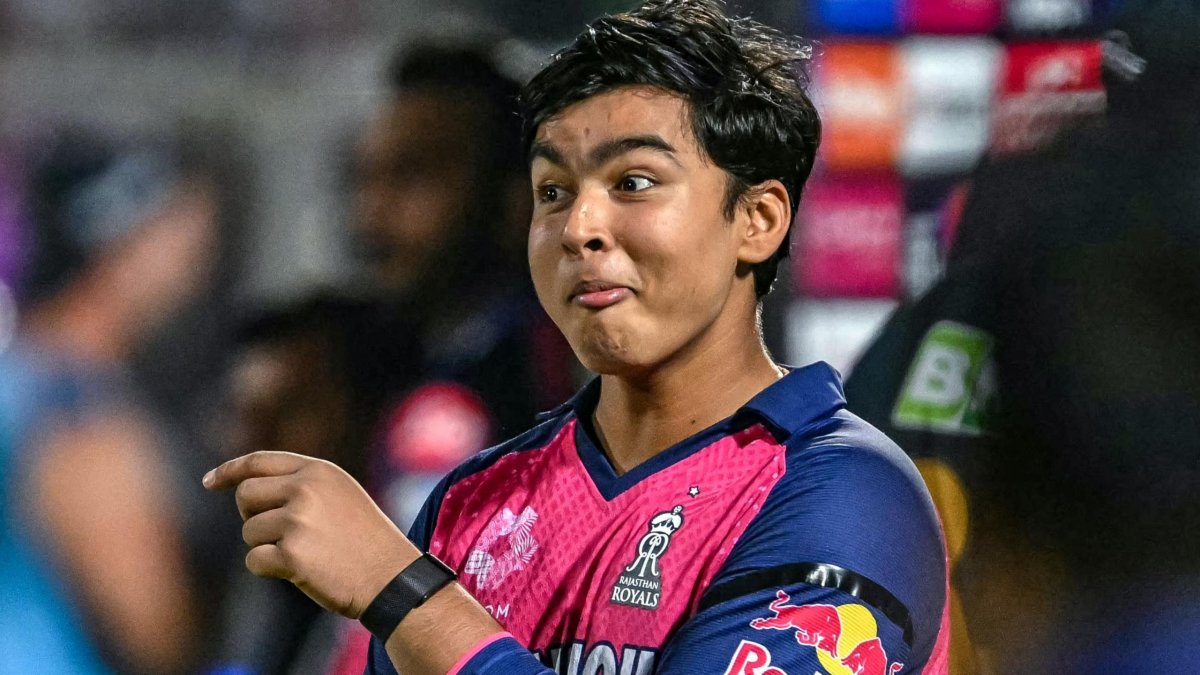
It was when the scoreboard flashed his fifty from scarcely any deliveries that the scale of what was happening sank in. Bowlers adjusted fields, captains moved men wider and deeper, but the margins available in T20 cricket are slim. Anything full enough to be driven went back straighter than it came; anything short sat up for the pull. By the time he reached three figures, in 35 balls, he had not only secured a victory but also seized three records at once: youngest IPL centurion, fastest IPL hundred by an Indian, and, more intangibly, most talked‑about innings of the season.
Beyond one night: domestic feats and technique
It would be easy to dismiss such an innings as an outlier, a perfect storm of form and fortune. Yet Vaibhav’s subsequent outings in domestic T20 cricket suggested continuity rather than coincidence. In state colours he produced another hundred across 60‑odd deliveries, again characterised by clean straight hitting and an unusual ability to access the leg‑side fence from outside off stump. Bowlers found that adjusting lines did not necessarily produce mishits; his bat swing, compact and fast, allowed him to roll his wrists or open the face late.
Technically, he is no academy manual. There is a hint of the school‑yard in his stance, a back‑lift that sometimes climbs higher than orthodox coaches prefer. But modern cricket has become more tolerant of idiosyncrasy, valuing repeatable outcomes over textbook aesthetics. What matters is that his base is stable at release, his head rarely falls away, and he sees the ball early enough to delay commitment. The rest, as so often in the short formats, is about nerve.
From IPL story to search phenomenon
The speed with which Vaibhav’s exploits translated into search traffic says as much about India in 2025 as it does about him. The story hits several national nerves at once: a child from a less celebrated state thriving on a global broadcast, the dream of overnight transformation, the romance of youth. Clips of his strokes flooded social platforms; local channels retraced his life from mohalla grounds to international‑style stadiums; commentators and ex‑players debated how soon he should be pushed towards higher honours.
When year‑end lists of “most‑searched people” appeared, his name sat atop an eclectic mix of entertainers, political figures and athletes. For a teenager whose professional career had barely begun, this was both a compliment and a caution. The attention that once fell gradually on international stars now descends in torrents on franchise prodigies. Handling that visibility—media, expectations, commercial offers—may prove as demanding as facing 140‑kph bowling.
The long road ahead
What, then, does the future hold for a 14‑year‑old already burdened with such heady statistics and labels? History suggests that early brilliance is no guarantee of a settled career. Bodies change, bowlers adapt, weaknesses are discovered. There is also the question of how quickly to move him through formats: the leap from domestic T20 to the longer forms is larger than it looks, and a player accustomed to success may struggle with the grind and failure rates of first‑class cricket.
Yet there are reasons for cautious optimism. Those who have worked with Vaibhav speak, in interviews, of a child who enjoys the process as much as the outcome: long hours with throw‑downs, obsessive net sessions, an appetite for watching cricket as well as playing it. If that is true, the foundation is more solid than a single hundred might suggest. The game will get harder; the novelty of his age will wear off; bowlers will plan more specifically. What will remain is whether he continues to relish the contest.
For now, Vaibhav Suryavanshi stands at a strange intersection of childhood and professional sport, of local dream and global attention. The innings that made him India’s most‑searched cricketer may, in the long view, prove either the opening chapter of a remarkable career or a dazzling preface to a more ordinary story. Cricket, thankfully, is played over years, not news cycles, and it will be on quieter days, away from viral scorecards and trending lists, that his true trajectory will be drawn.
The author is a long‑form cricket writer who focuses on how individual stories, statistics and turning points fit into the wider history of the game. Drawing on detailed match analysis and player research, the author aims to give readers context beyond the scorecard, especially around emerging talents like Vaibhav Suryavanshi.

More Cricket Stories

BCCI Confirms Goa as Venue for IPL 2027 Auction; Date, Schedule Window and Key Details

Afghanistan Announce Massive Multi-Format Series Against Bangladesh and Zimbabwe in UAE | Full Schedule

Who Is Better in T20s – Abhishek Sharma vs Shubman Gill (Full 2025 Comparison)
Prithvi Shaw - The Biggest Fraud or the Most Misunderstood Talent in Indian Cricket?
CSK vs PBKS 2026 Playing 11 Prediction, Full Squads, Team News and Player Availabilities and More | IPL 2026
Another Australian Legend Announced Retirement from All Formats; Alyssa Healy Marks This Date for Her Farewell!
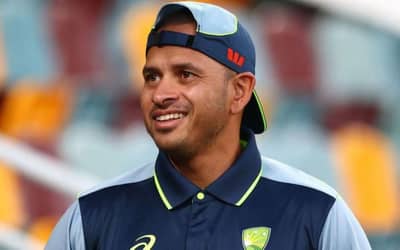
“I’ll Be Retiring From International Cricket,” Australian Legend Usman Khawaja Announced His Retirement