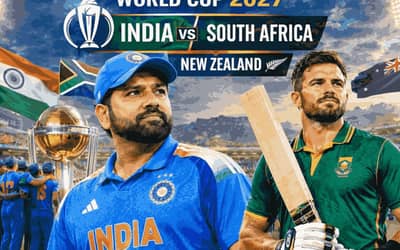
T20 WORLD CUP 2026: WHAT'S CLEAR, WHAT'S CONFUSING, AND WHAT'S STILL PENDING

New Delhi: The ICC Men's T20 World Cup 2026 begins Saturday with unprecedented diplomatic tensions shadowing the tournament. As warm-up matches conclude and teams prepare for the month-long competition across India and Sri Lanka, clarity on critical issues remains elusive despite official announcements.
WHAT'S CRYSTAL CLEAR
Tournament Framework: The tournament will be held from 7 February to 8 March 2026 in India and Sri Lanka, with teams playing 55 matches across five venues in India and three venues in Sri Lanka. Twenty teams compete in the tournament, with the tournament divided into four groups of five each.
Host Nations: India and Sri Lanka's co-hosting status is finalized. Sri Lanka had previously hosted the competition in 2012 and India in 2016. India boasts world-class stadiums in Ahmedabad, Delhi, Kolkata, Mumbai, and Bangalore, while Sri Lanka will host matches in Colombo and other venues.
Format and Progression: In the Super 8 stage, each team will play against each of the other teams in the group once. The top two teams from each group will advance to the knockout stage, which consists of two semi-finals, the winners of which face off in the final. The knockout stage consists of two semi-finals to be played on 4 and 5 March, and the final on 8 March.
Seeded Teams: Eight teams–Australia, India, South Africa, and the West Indies in Group 1; England, New Zealand, Pakistan, and Sri Lanka in Group 2, were seeded for the Super 8 stage based on the T20I rankings.
India's Status: India are the defending champions, having won the previous edition in 2024.
Historic Milestone: Italy qualified for the men's T20 World Cup for the first time.
WHAT'S COMPLICATED: PAKISTAN BOYCOTT AND BANGLADESH CRISIS
The most significant complication overshadowing the tournament centers on Pakistan's unprecedented decision and Bangladesh's removal. Pakistan will boycott their Group A game against India at the 2026 T20 World Cup, with a Government of Pakistan post stating the Pakistan Cricket Team shall not take the field in the match scheduled on 15th February 2026 against India.
Solidarity Statement: Pakistan Prime Minister Shehbaz Sharif has said the boycott was a show of solidarity with Bangladesh, stating "We have taken a very clear stand that we will not play the match against India" and "there should be no politics in sport." However, the statement itself embodied political protest, with Pakistan's decision linked to Bangladesh's removal from the tournament after their government refused to let the team travel to India for their games, citing security concerns.
Bangladesh's Ouster: Bangladesh were removed after their government refused to let the team travel to India, where they were based for their games, preferring to play in Sri Lanka instead; the ICC Board voted 14-2 in favour of replacing Bangladesh with Scotland. The PCB were one of the two votes against the decision, along with the BCB.
Double Standards Accusation: PCB chief Mohsin Naqvi called the ICC's decision "double standards," citing India's refusal to travel to Pakistan for the Champions Trophy in 2025, saying "You can't have double standards."
Financial and Competitive Fallout: Pakistan will forfeit two points in the group stage for the boycott, which India will gain without playing. In 2021, the India-Pakistan match at the T20 World Cup registered a record 167 million viewers, making it the most watched T20 international in history. Cricket experts estimate the cancelled match could result in losses exceeding $250 million for broadcasters and co-hosts.
Pakistan Captain's Dilemma: Pakistan captain Salman Ali Agha clarified that his team's decision to boycott the India group-stage match was taken by the Pakistan government and is beyond the players' control, adding "If we have to play them again in the semifinal or final, we will have to go back to them and act on their advice."
WHAT'S STILL UNRESOLVED
ICC Sanctions Path Unclear: While the ICC has warned Pakistan of "significant and long-term implications for cricket in its own country" and an impact on the global cricket ecosystem, the governing body has not explicitly outlined enforcement mechanisms or penalties. The Members Participation Agreement mandates teams play all scheduled matches, but no formal action has been announced.
Potential Knockout Complications: If Pakistan end up playing a knockout game against India in the 2026 T20 World Cup, the case will hinge on the wording of the government order the PCB is relying on. Legal experts remain divided on whether Pakistan's government order applies only to the group stage or to potential knockout encounters.
Host Nation Concerns: Sri Lanka Cricket told the Pakistan Cricket Board that a boycott would result in a financial hit and also hurt the island's tourism industry. Sri Lanka has formally requested Pakistan reconsider, but Pakistan has maintained its position.
Tournament Momentum: The boycott threatens to overshadow competitive play and media focus. With the group stage running until February 20, followed by the Super Eight phase from February 21 to March 1, the India-Pakistan void leaves a significant void in the tournament's marquee fixtures.
THE ROAD AHEAD
Pakistan's participation in the tournament proceeds despite the India boycott. Pakistan will play Group A clash with Netherlands scheduled for February 7, the opening day, followed by USA matches and eventually Namibia. The team travels to Sri Lanka where all their group matches are scheduled.
India begins its campaign against the USA on Saturday, defending its 2024 championship title at home. The tournament enters uncharted territory—never before has a team boycotted a World Cup match at this magnitude. As teams prepare for the opening matches, the IPL incident that triggered Bangladesh's non-travel, Pakistan's political decision, and the ICC's controversial ruling continue to overshadow what should be purely cricketing excellence.
Whether the boycott holds firm or negotiations lead to a reversal remains the tournament's most pressing question. For now, administrators, broadcasters, and fans await clarity on whether sport can overcome geopolitics—or if this World Cup becomes defined by what wasn't played rather than what was.
---
(With inputs from ICC official statements, government sources, cricket administrators, and international media)
More Cricket Stories

India vs West Indies 4th T20I Today: Yuvraj Singh Joins DC for IPL 2027

Suresh Raina Breaks Silence on CSK Batting Coach Role Ahead of IPL 2027

IPL 2027 Latest Update: Goa Auction, Retention Deadline, Ganguly’s DC Return and Big Trade Buzz
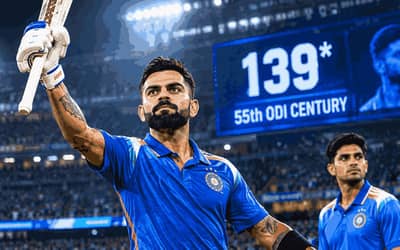
ICC ODI Rankings: Virat Kohli Rises to No. 2 After West Indies Masterclass
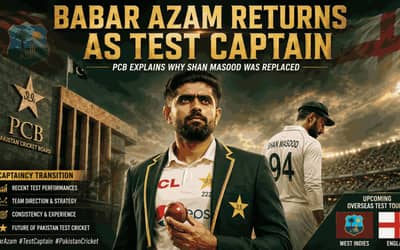
PCB Reveals Why Babar Azam Replaced Shan Masood as Pakistan Test Captain Before England Tour
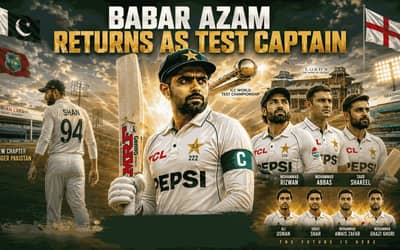
Babar Azam Returns as Pakistan Test Captain as PCB Unveils Squads for West Indies and England Series
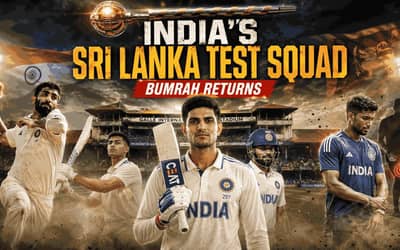
Shubman Gill Set to Lead India in Sri Lanka Tests as Jasprit Bumrah Returns; Nitish Kumar Reddy Likely to Miss Out