Pakistan Boycotts India at T20 World Cup: The Drama, The Chaos, and What's Next

On February 1, 2026, the Pakistan government dropped a cricket nuke: their team will skip the India match at the T20 World Cup. Not the entire tournament—just the one match against their arch-rival, scheduled for February 15 in Colombo, Sri Lanka.
Yes, you read that right. In what can only be described as the most dramatic "I'm taking my ball and going home" moment in cricket history, Pakistan is showing up to the World Cup... but only for three of their four group matches.
But Why Though? The Bangladesh Connection
Here's where it gets spicy. Bangladesh wanted to play their matches outside India due to security concerns. The ICC said no. Bangladesh walked away in protest, becoming the first team to miss a T20 World Cup since the tournament started in 2007.
Pakistan watched this drama unfold and apparently thought: "You know what? We're going to make a statement." So they decided to boycott the biggest, most-watched, most profitable match of the entire tournament.
It's like showing up to your friend's birthday party, eating cake with everyone else, but refusing to participate in the one game they actually organized it for. Bold? Absolutely. Smart? Let's discuss.
The Numbers Are Absolutely Bonkers
The India-Pakistan match in cricket is not just another game. In 2021, it had 167 MILLION viewers—making it the most-watched T20 match in history. That's more viewers than most television events on the planet.
This isn't just about cricket pride or rivalry bragging rights. This is about cold, hard cash. Broadcasters invested tens of millions in advertising rights. Sponsors lined up sponsorships worth millions. The R. Premadasa Stadium in Colombo was preparing for the biggest revenue day of the tournament.
Now, all of that is going up in smoke.
The Reactions: When the Cricket World Lost Its Mind
Shashi Tharoor (Congress MP and respected political figure): Called the entire situation "pretty disgraceful" and said it's "spiralling out of control." He warned that politics has invaded sport on both sides and called for emergency talks: "Sports should be bringing us together, not dividing us."
Harsha Bhogle (Indian cricket commentator): Warned that if the ICC's revenue drops, guess who suffers most? Not India, Australia, or England who have other revenue sources. But Pakistan? Pakistan will bleed the hardest because they rely heavily on ICC funds.
Rashid Latif (Former Pakistan captain): Warned that sanctions could hit Pakistan, but also called out the ICC's hypocrisy—pointing out that Australia and West Indies forfeited matches in 1996, and England refused to travel to Zimbabwe in 2003. "Where was the ICC then?" he asked.
Kevin Pietersen (Former England captain): Asked the million-dollar question: "If Pakistan boycotts the group match, will they also boycott the final if they somehow meet India there?" Nobody has an answer yet.
BCCI Vice-President Rajeev Shukla: Fully backed the ICC's position: "ICC has spoken about sportsmanship. We completely agree with the ICC."
Cricket Twitter's Best Take: "When you can't beat them, boycott them." (The memes have been glorious.)
What Pakistan Actually Loses Here
Let's be brutally honest about the damage:
Two Points Gone: That's two crucial group-stage points Pakistan is voluntarily handing to India. In a tournament where every point counts, this could be the difference between qualification and elimination.
Net Run Rate Nightmare: Pakistan's net run rate won't be affected by a forfeit match (that's how the ICC rules work). But they still have to win more games now to qualify, meaning zero margin for error.
The $38 Million Lawsuit Tsunami: Broadcasters are threatening to sue Pakistan for up to $38 million for breach of contract. This is the actual revenue they lost from not broadcasting the match.
The ICC Sanctions Threat: Multiple sources suggest the ICC could ban PCB members from overseas tournaments, deny work permits to overseas players, freeze ICC funds, and exclude Pakistan from future tournaments. The ICC board is having emergency virtual meetings specifically about this.
Future Tournament Chaos: There's a Women's T20 World Cup in England later this year. Pakistan might skip that too if they follow this path. Then there's the Champions Trophy in India in 2028. Rashid Latif warned: "This won't end here. The damage is just beginning."
The Unanswered Question: What About the Final?
Here's the plot twist nobody wants to talk about: What if Pakistan and India both qualify for the semi-finals or—gasp—the final?
Pakistan's government hasn't clarified if they'll boycott those matches too. Will Pakistan actually skip a World Cup final against India? Or will they play, making the group-stage boycott look ridiculous?
Cricket analyst Dure Shahwar Bano told Al Jazeera: "What if these two countries qualify for the semi-finals or finals? It will be a nightmare if the biggest game of the event cannot happen."
What Actually Happens on February 15
Here's how it will play out: India will show up with their captain Suryakumar Yadav. They'll do the toss. They'll get their 11 players ready. Meanwhile, Pakistani players will be... somewhere else. Probably at their hotel. Or the nets. Or philosophically questioning Pakistan's government decisions.
The match referee will call it. Pakistan is a no-show. The ref will award India a walkover victory and 2 points. India advances without playing a single ball.
Two million people who bought tickets? Two million people in India and Pakistan who took time off work to watch? The entire broadcast infrastructure? All wasted.
The Pakistan Captain's Awkward Statement
Pakistan's T20 captain Salman Ali Agha had to do damage control before departing for Sri Lanka: "We are players contracted to the Board and whatever decision our government and Board have taken, all the players are on board with it."
Translation: We're not happy, but we have to follow orders.
Agha added: "We have three league stage matches, and the T20 World Cup was not just about playing against India."
It's the cricket equivalent of "I'm fine with this decision" while internally screaming.
The ICC's Stern Warning
The ICC didn't mince words: "This position of selective participation is difficult to reconcile with the fundamental premise of a global sporting event where all qualified teams are expected to compete on equal terms."
Translation: "Y'all, this is messed up, and we're not happy."
The ICC further stated that selective participation "undermines the spirit and sanctity of the competitions" and warned of "significant and long-term implications for cricket in Pakistan's own country."
The Hypocrisy Counter-Argument
Here's where Pakistan has a point (yes, seriously): The ICC previously allowed India to play all their matches outside Pakistan when Pakistan hosted tournaments. Under a special bilateral agreement, Pakistan is now required to host India matches in third countries like Sri Lanka.
Pakistan's Interior Minister and PCB Chairman Mohsin Naqvi argued: "You can't have double standards. You can't say for one country they can do whatever they want and for the others to have to do the complete opposite."
Fair point. But also... the solution isn't to ruin the tournament for everyone else.
Historical Precedent: Teams Have Boycotted Before
Pakistan isn't the first to do this, though it's rare. In 1996, Australia and West Indies refused to travel to Sri Lanka due to security concerns after a central bank bombing. Sri Lanka got easy walkovers and actually used this momentum to win the tournament.
But those were logistical/safety concerns. This is pure politics.
The Balochistan Connection
Pakistan's Interior Minister also mentioned recent attacks in Balochistan that killed dozens of people, blaming India. While not explicitly stated as the reason, this added another layer to the tensions.
So now we have: Bangladesh solidarity + ICC double standards + geopolitical tensions + government decree = No cricket match.
What Happens If This Gets Worse?
Scenario 1 (Most Likely): ICC fines Pakistan, imposes restrictions, Pakistani cricket takes a financial hit, everyone moves on. Pakistan's tournament prospects are damaged.
Scenario 2 (The Escalation): Pakistan gets banned from tournaments. Other teams refuse to travel to Pakistan. Pakistani players can't work overseas. The sport becomes a geopolitical nightmare.
Scenario 3 (The Ultimate Drama): Pakistan and India meet in the final, and Pakistan has to decide: Do we play or boycott the final too? If they boycott, they lose a World Cup final. If they play, this whole protest looks stupid.
The Real Winner Here
Honestly? Nobody wins. Not Pakistan (who loses points and faces sanctions). Not India (who gets gifted points, which looks cheap). Not the ICC (who looks incompetent for creating this mess). Not the fans (who don't get to see the biggest rivalry match).
The only winner is the meme community, who have absolutely feasted on this controversy.
What's Next? The Timeline
February 7: Pakistan plays Netherlands (they'll actually show up)
February 10: Pakistan plays USA (they'll actually show up)
February 15: Pakistan doesn't show up to India match (confirmed as per government orders)
February 18: Pakistan plays Namibia (they'll actually show up)
February onwards: ICC decides on sanctions, lawyers get involved, cricket becomes more about politics than sport
The Bottom Line
Pakistan's boycott of the India match is unprecedented in its circumstances and will have consequences that extend far beyond February 15. It's a bold political statement, sure. But in cricket, where even bitter rivals ultimately choose to compete, walking away sends a message louder than any on-field victory could.
Whether it's remembered as a principled stand against ICC hypocrisy or a costly self-sabotage that damaged Pakistani cricket will depend entirely on what happens next—and whether other teams follow suit, or whether the cricket world collectively decides this is where politics ends and sport begins.
One thing's for certain: When cricket historians look back at the 2026 T20 World Cup, the match that wasn't played will be more talked about than any match that was.
Key Quotes Worth Remembering
Shashi Tharoor: "This whole thing is spiralling out of control. This is now a wake-up call for all concerned to contact each other on an emergency basis."
Rashid Latif: "Pakistan generally don't take such decisions. This will have a big impact and will not end here."
ICC Statement: "Selective participation is difficult to reconcile with the fundamental premise of a global sporting event."
Kevin Pietersen: "Will Pakistan boycott if they meet India in the final?"
More Cricket Stories

Suresh Raina Breaks Silence on CSK Batting Coach Role Ahead of IPL 2027

Asian Games 2026: Full List of India’s 85 Medal Winners, Gold, Silver and Bronze
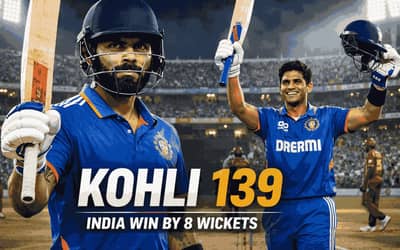
India vs West Indies 1st ODI: Virat Kohli 139, Shubman Gill Century Power India to 8-Wicket Win
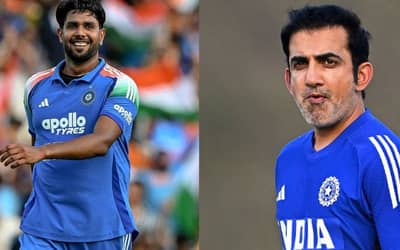
India vs Afghanistan T20Is: Harshit Rana Ruled Out of Series and Asian Games 2026, Yash Thakur Gets Call-Up
Asian Games Cricket: Semi-Final Line-Up Confirmed After Rain Abandons All Four Quarter-Finals

Ashwin Questions BCCI CoE Injury Management, Raises Accountability Concerns
India vs West Indies 1st ODI: India Begin 3-Match Series in Thiruvananthapuram