Ashwin Questions BCCI CoE Injury Management, Raises Accountability Concerns
Ravichandran Ashwin has questioned India's injury-management system, citing Varun Chakravarthy's rehabilitation and calling for greater accountability at the BCCI Centre of Excellence.
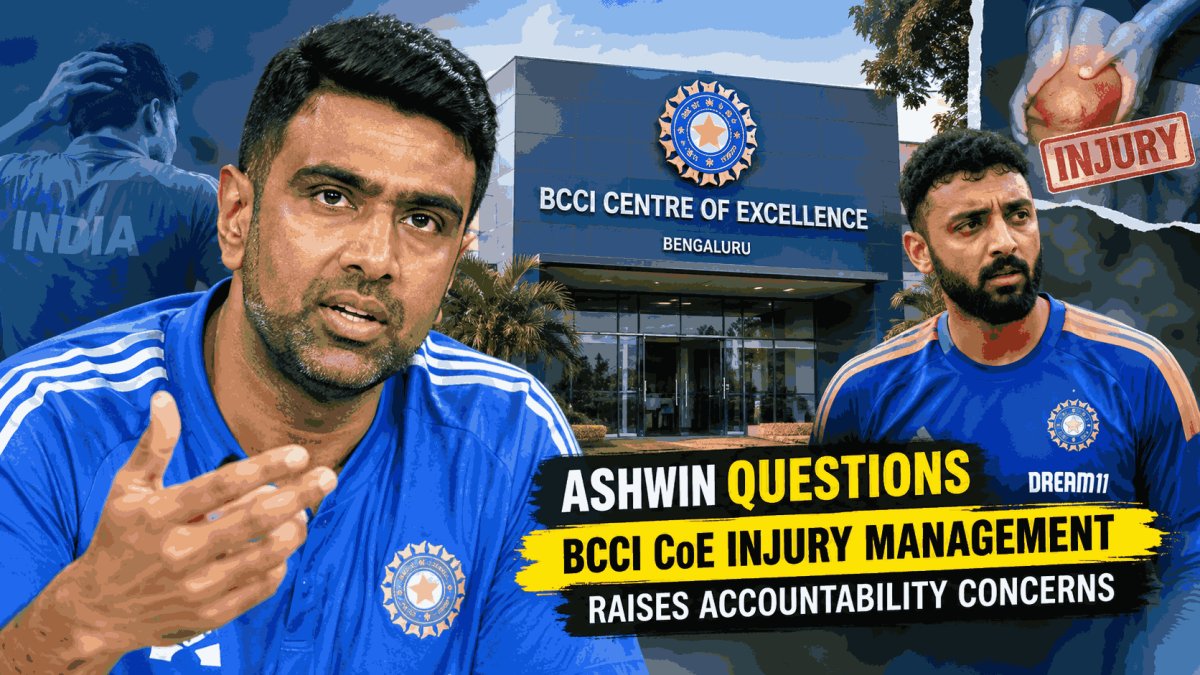
Former India spinner Ravichandran Ashwin has questioned the injury-management structure surrounding Indian cricket, calling for greater accountability while highlighting the prolonged rehabilitation of spinner Varun Chakravarthy at the BCCI Centre of Excellence (CoE) in Bengaluru.
Ashwin’s comments come at a time when the CoE has faced increasing scrutiny over the number of injuries affecting Indian players, rehabilitation timelines and communication between the facility and the national selection committee. Recent reports have also highlighted concerns surrounding the availability of several key players.
Speaking on his YouTube channel, Ashwin suggested that Indian cricket may need to reconsider how players are managed across the three international formats. He believes separate squads for Test, ODI and T20I cricket could help manage workloads more effectively, while allowing a small number of players to move between formats.
“I think the time has come to make separate teams for Tests, ODIs and T20Is. There might be cross-pollination of one or two players.”
Ashwin also stressed that a stronger system of accountability is required when it comes to managing player injuries.
“Somewhere down the line there has to be accountability for injury management.”
His comments have added another layer to an ongoing debate around the BCCI’s high-performance structure and the role of the Centre of Excellence in preparing players for a return to competitive cricket.
Ashwin Highlights Varun Chakravarthy’s Rehabilitation
One of the major examples raised by Ashwin was Varun Chakravarthy.
According to Ashwin, Chakravarthy spent several months at the National Cricket Academy, now operating as part of the BCCI Centre of Excellence, during his rehabilitation. Ashwin said there had been discussions about allowing the spinner to play in the Tamil Nadu Premier League, but permission was not granted at the time.
“I know that Varun Chakravarthy was at the NCA for the last three to four months. We were asking for permission for the TNPL, and they didn't release him,” Ashwin said.
He questioned why the rehabilitation period had stretched for several months when he believed Chakravarthy could potentially have returned earlier.
“He should have returned in a month, but he was there for two to three months,” Ashwin added.
Chakravarthy subsequently returned to international cricket but suffered another setback. After playing in the first T20I against Afghanistan, he was ruled out of the remaining matches after sustaining a fresh side strain. He had only recently recovered from a hamstring injury suffered during India's England tour.
The recurrence has naturally intensified discussion about rehabilitation, workload management and the process used to determine when a player is ready to return.
Communication Gap Between CoE and Selectors
The issue goes beyond individual injuries.
A PTI report in August highlighted an alleged communication disconnect between the CoE's sports science and medical teams and India's senior selection committee. The report cited Jasprit Bumrah's unavailability for the Sri Lanka Test series as an example, with selectors reportedly expecting him to be available before his recovery timeline became clearer.
A virtual meeting involving senior CoE officials, including VVS Laxman, and selection committee chairman Ajit Agarkar was subsequently held to discuss injury-management issues concerning centrally contracted players.
However, the CoE leadership has disputed the suggestion that there is a communication gap.
VVS Laxman said in August that there was no communication problem between the CoE, selectors and the Indian team management. He also explained that the facility's responsibilities extend beyond rehabilitation, covering areas including high performance, sports science, sports medicine and education.
That distinction is important because the current debate is not simply about whether players are getting injured. It also concerns how injuries are assessed, how rehabilitation is monitored and how information about a player's availability reaches selectors and team management.
BCCI’s Sports Science Leadership Under Focus
Another issue surrounding the CoE has been the vacant Head of Sports Science and Medicine position.
Nitin Patel left the position in 2025, and the BCCI subsequently faced difficulties in appointing a permanent replacement. During the interim period, senior physiotherapist Dhananjay Kaushik has been handling responsibilities associated with the role.
In September, the BCCI reportedly began another search for a permanent Head of Sports Science and Medicine following increased scrutiny of its injury-management system. Concerns have included rehabilitation periods, fitness assessments and coordination with the selection committee.
The BCCI itself has described the CoE as a comprehensive high-performance facility rather than simply a rehabilitation centre. Its stated process involves diagnosing injuries, managing rehabilitation and eventually clearing players after return-to-play matches, depending on the nature of the injury.
Ashwin Says Players Also Have Responsibility
While Ashwin questioned the system, he did not place the entire responsibility on medical and sports-science professionals.
The former India spinner argued that players themselves must examine their training methods and physical workload. According to Ashwin, injury prevention is partly dependent on whether athletes are performing exercises appropriate for their bodies and requirements.
He used his own playing career as an example.
“As a player, you also have to see that your training method is correct. Am I doing the right exercises?” Ashwin said.
He recalled suffering a side strain in 2015 and attributed it to Olympic lifting.
“The only side strain I suffered in 2015 was due to Olympic lifting. After that, I stopped snatching,” he explained.
His point underlines the complexity of injury prevention in professional cricket. Medical teams can monitor players and establish rehabilitation programmes, but training loads, recovery, conditioning and individual choices also influence a player's physical condition.
India’s Injury List Adds to the Concern
The discussion has gained momentum because injuries have affected several Indian players during a demanding international schedule.
Varun Chakravarthy's latest setback came after his return from a hamstring injury. Harshit Rana has also faced another fitness setback, while players including Jasprit Bumrah, Nitish Kumar Reddy and Washington Sundar have dealt with injury-related interruptions during 2026.
India head coach Gautam Gambhir has also acknowledged the growing injury list and its impact on team continuity. A frequently changing playing XI can make long-term planning more difficult, particularly with major international assignments ahead.
For Ashwin, therefore, the issue is not simply about one player's injury or one rehabilitation programme. His comments point towards a broader question: whether India's current multi-format structure, workload management and injury-monitoring processes need to evolve.
What Happens Next for India’s Injury-Management System?
Ashwin's remarks are likely to keep the focus on the BCCI Centre of Excellence and its injury-management processes.
The debate now involves several interconnected areas: communication between the CoE and selectors, rehabilitation timelines, return-to-play protocols, workload monitoring and the responsibilities of individual players.
The BCCI has already faced questions over its sports-science leadership and has moved to address the vacant senior position. Meanwhile, the CoE maintains that it has established protocols for injury rehabilitation and player monitoring.
For Indian cricket, the challenge will be to ensure that players are not only declared fit but are also physically prepared to handle the demands of international cricket once they return.
Ashwin's intervention has brought that question firmly back into the spotlight. With India managing three formats and a packed international calendar, injury prevention, transparent communication and carefully monitored workloads are likely to remain major talking points in the months ahead.
More Cricket Stories
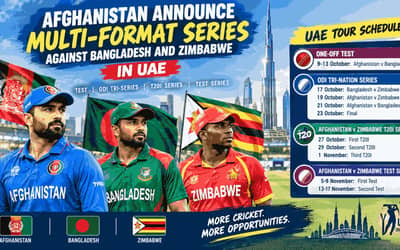
Afghanistan Announce Massive Multi-Format Series Against Bangladesh and Zimbabwe in UAE | Full Schedule

IPL 2027: Hardik Pandya to CSK? Mumbai Indians Reportedly Demand Shivam Dube and Ayush Mhatre in Mega IPL Trade

England Announce Action-Packed 2027 Home Summer Schedule Featuring Men's & Women's Ashes

FIFA World Cup 2026 Rankings: Final Team Standings After Spain's Historic Triumph
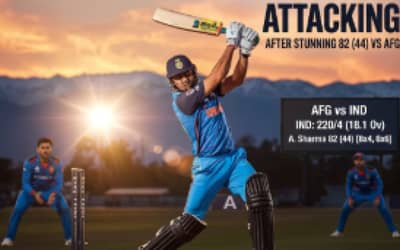
IND vs AFG: Abhishek Sharma Vows to Keep Attacking After Stunning 82 Against Afghanistan
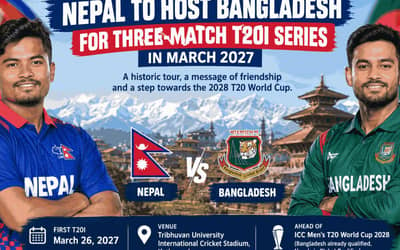
Nepal vs Bangladesh T20I Series 2027: Schedule, Date, Venue and Latest Updates
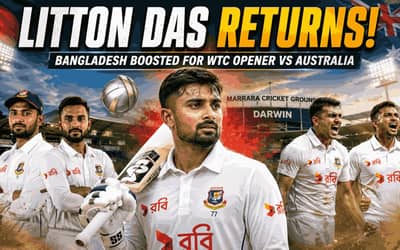
Litton Das Returns as Bangladesh Name Squad for WTC 2025-27 Series Opener Against Australia in Darwin